Fly control

Fly control for residential and commercial properties

Residual treatments and sanitation advice for ongoing fly pressure in homes, hospitality venues, commercial kitchens, and other environments where fly activity is a recurring issue.
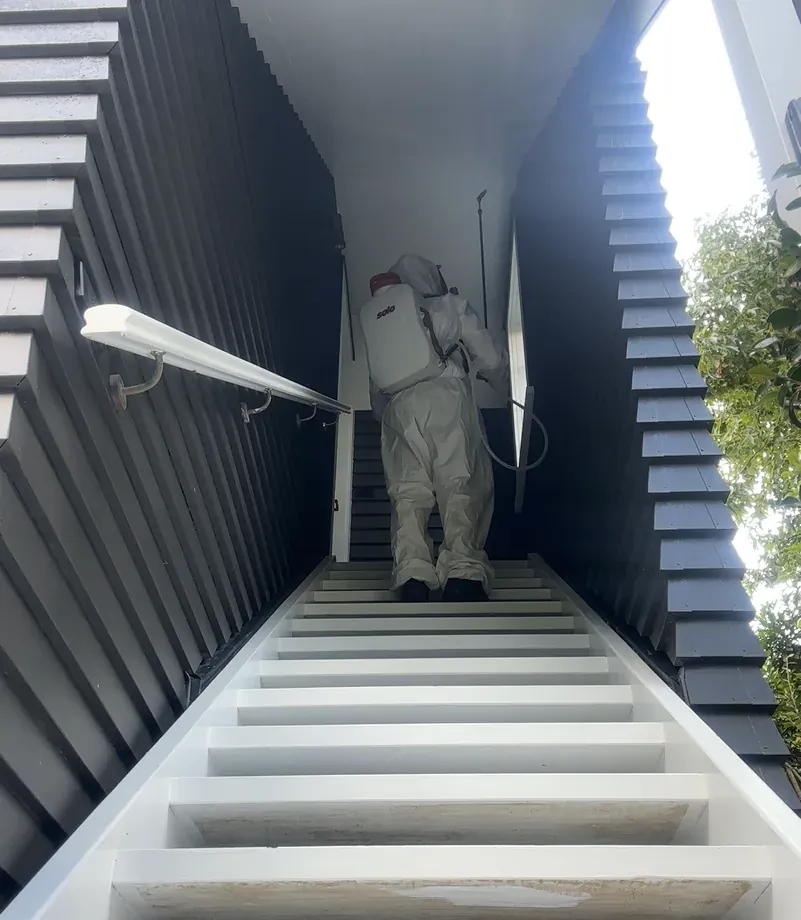
Technician applying exterior treatment for fly control at a residential property
Guide price From $210 + GST
Warranty 3-month warranty included
Next step Request a quote
View full pricing guide →
Signs you need treatment

Signs that fly control may be needed

Persistent indoor fly activity
Flies consistently present inside the property despite cleaning — particularly in kitchens, food preparation areas, or waste areas.
Blowfly or cluster fly pressure
Large flies entering the property — particularly in autumn when cluster flies seek shelter, or blowflies around waste or food odours.
Commercial food environments
Fly activity in hospitality venues, commercial kitchens, or food handling areas — both a hygiene concern and a compliance issue.
Outdoor seating or waste areas
Fly pressure around outdoor dining, bin storage, or waste areas affecting customer experience or property amenity.
Warehouse or storage environments
Fly activity in storage areas, loading docks, or distribution environments where produce, waste, or organic material is present.
Recurring seasonal issue
Fly problems that return each year at the same time — indicating an ongoing environmental driver that needs a structured response.
Treatment overview

How fly control works

Fly control combines residual surface treatment with sanitation advice to address both the immediate activity and the underlying drivers. Treatment is applied to surfaces where flies rest and breed, with product selection based on the environment and the type of fly involved.

01
Identify the fly type and source
Different fly species behave differently and may require different treatment approaches. We identify the species and likely source before recommending a method.
02
Residual surface treatment
Registered insecticide applied to surfaces where flies rest — walls, ceilings, entry points, and waste areas. Treatment targets resting behaviour, not just flying insects.
03
Sanitation recommendations
We advise on any environmental factors contributing to the issue — waste management, drainage, food storage, or entry point sealing — that will improve treatment effectiveness.
04
Follow-up if needed
For persistent or recurring fly issues, a follow-up visit or scheduled maintenance approach may be recommended.
Pricing guide

Fly control pricing

Guide pricing for standard residential fly control. Final pricing depends on the type of activity and treatment scope required.

ServiceGuide price
1–2 bedroom home
Standard residential treatment
$210 + GSTGuide price
3–4 bedroom home
Extended residential treatment
$280 + GSTGuide price
5+ bedroom home
Larger property treatment
$330 + GSTGuide price
Commercial
Site-specific scope and environment
POATailored quote
3-month warranty on all residential treatments

Prices are guide prices only. A confirmed quote will be provided before any work begins. View full pricing guide →

What affects the price
  • Type of fly and level of activity
  • Property type — residential, commercial, or hospitality
  • Treatment areas — interior, exterior, or both
  • Whether a one-off or scheduled approach is more appropriate
  • Commercial environments may require tailored quoting
Before treatment

Before we arrive

  • Ensure waste bins are covered and emptied before the treatment visit
  • Clear food preparation surfaces and cover any exposed food
  • Let us know which areas are most affected so we can focus the treatment accordingly
After treatment

What to expect afterwards

  • Allow treated surfaces to dry before normal use — usually 30–60 minutes
  • Maintain good waste management and sanitation practices to support treatment effectiveness
  • Get in touch if activity levels remain high after 2 weeks and we'll advise on next steps
Common questions

Fly control — questions we're often asked

Yes, using products appropriate for food handling environments. We'll confirm the specific products and any precautions relevant to your setting when booking.
Yes. Treatment can be applied to indoor resting areas, outdoor waste areas, entry points, and surrounding exterior surfaces depending on where the activity is most concentrated.
Blowflies are typically associated with organic material, waste, or animal remains. Cluster flies seek warm spaces in autumn and are not associated with hygiene issues — they're a nuisance rather than a contamination risk.
Drain flies breed in organic matter in drains and are a different treatment challenge. If you suspect drain fly activity, mention it when getting in touch and we'll advise on the appropriate approach.
For seasonal or situational issues, a single treatment can be effective. For commercial environments or recurring pressure, a scheduled maintenance approach typically delivers better long-term results.
View All FAQs
Related pages

Related services

Need fly control in Auckland?

Get in touch for a quote. We respond within 48 hours.